
Why Joints Stiffen in the Cold — and How Pilates in Arlington Helps

By Cami Grasher | The Pilates Effect
The mornings are finally crisp in North Texas. For a lot of us, that means getting out of bed a little slower, hearing a creak in the knees on the stairs, or feeling hips that need a few minutes to "warm up" before they cooperate.
If that sounds familiar, you're in good company. Osteoarthritis, the wear-and-tear kind of arthritis, is one of the most common reasons adults over 50 start to move less. And moving less is exactly what makes stiff joints feel worse. This week, let's talk about why your joints love Pilates , and what you can do at home on the cold mornings in between classes.
Is it really the weather?
Maybe, maybe not. A 2023 review of the research found that colder temperatures and changes in air pressure were modestly linked with more osteoarthritis pain in some studies. But a large 2024 study from the University of Sydney found no clear link between weather and everyday joint or back pain at all.
Here's what we do know: when it's cold and dark, most of us sit more, walk less and skip the workouts that keep our joints happy. Joints are fed by movement. Gentle, regular motion helps circulate the fluid that lubricates the joint, and strong muscles take load off the cartilage. So whatever the thermometer says, the fix is the same: keep moving.
What the research says
Exercise is first-line treatment. The American College of Rheumatology and the Arthritis Foundation strongly recommend exercise as a core treatment for knee and hip osteoarthritis. Their guideline notes that no single type of exercise is clearly best. The best program is the one you'll actually stick with.
Pilates is a promising option. A 2025 review that pooled 11 studies of Pilates for knee osteoarthritis found that Pilates reduced pain compared with no exercise, and worked about as well as conventional exercise programs. A 2022 review of adults over 50 with chronic muscle and joint conditions, including knee arthritis, found Pilates was safe, reduced pain and was about as effective as other exercise. People also enjoyed the group setting, which helped them stick with it.
Let's be honest about the limits: most of these studies are small, and Pilates won't reverse arthritis or replace your doctor's care. But it is a safe, low-impact way to build the strength, mobility and balance that make everyday life easier, and the research keeps pointing in a good direction.
How Pilates helps achy joints
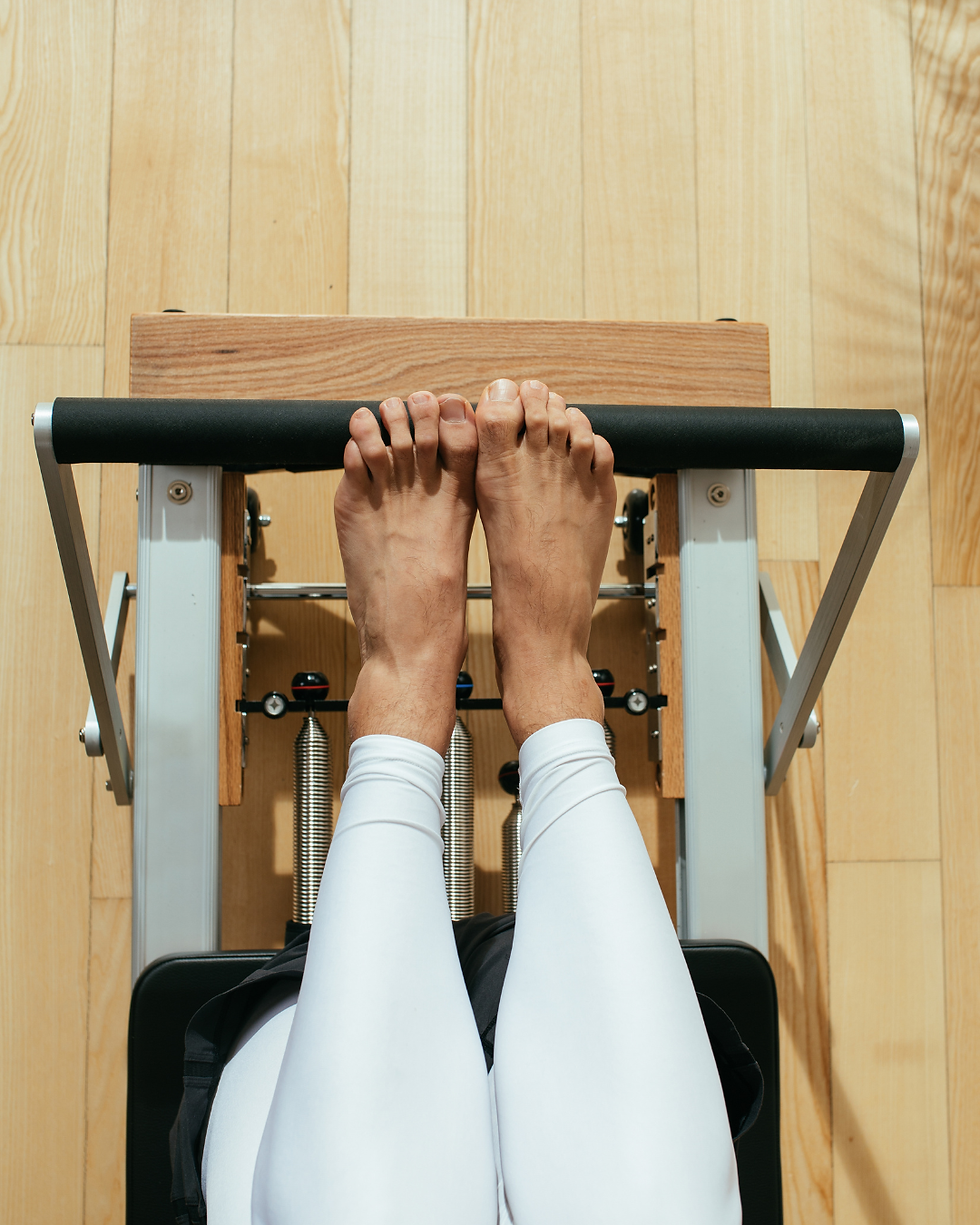
Strength without pounding. The Reformer's springs let you strengthen the muscles around your knees and hips with no impact. Strong thighs and glutes act like shock absorbers for your joints.
Movement through a comfortable range. We work joints through smooth, controlled motion, so they get the movement they need without forcing anything.
Better alignment. STOTT PILATES® focuses on how the pelvis, knees and feet line up. Small alignment changes can take stress off a cranky knee or hip.
Steadier balance. Stiff joints can change the way we walk. Pilates trains balance and control, which matters for fall prevention as we age.
Modifications for every body. Your instructor can adjust springs, range and positions so you're always working in a way that feels good for your joints.
Try this: a 5-minute morning joint warm-up
Do this on your bed or on a mat before you start your day. Move slowly, breathe, and stay in a pain-free range.
Ankle pumps and circles. Lying on your back with legs long, point and flex your feet 10 times, then circle your ankles 5 times each way.
Heel slides. Bend your knees with feet flat. Slowly slide one heel away until the leg is long, then slide it back. Do 8 per leg.
Knee sways. With knees bent and feet hip-width apart, let both knees sway gently a few inches to one side, then the other. Do 8 slow sways, keeping it small and easy.
Pelvic curl (bridge). Exhale and gently roll your hips up a few inches, one vertebra at a time, then roll down. Do 6 to 8, only as high as feels comfortable.
A little warmth helps too. A warm shower first, or a cozy layer on your legs, can make the first few minutes feel easier. If a movement causes sharp pain, stop. If you've had a joint replacement, ask your surgeon or physical therapist which movements are right for you, and let your instructor know before class.
Don't hibernate this winter
It's tempting to wait for warmer weather, but your joints do best with steady, regular movement, especially when it's cold. Two classes a week is a great goal, and even one keeps the momentum going through the holidays.
Book your next class
Come let us help your knees, hips and back feel better this season. Book your next classat thepilateseffect.com/schedule. We'd love to see you in the new studio.
This article is for general information and isn't medical advice. Talk with your doctor before starting a new exercise program, especially if you have arthritis, a joint replacement or another medical condition.
Cami Grasher is the owner of The Pilates Effect, a Root Cause Holistic Health Coach and Certified Traditional Naturopath at My Root Cause Coach and Your Healthy Concepts in Arlington, TX. Learn more at thepilateseffect.com, myrootcausecoach.com or yourhealthyconcepts.com, or call (214) 558-0996.
If you want to work on this in person, we teach it at The Pilates Effect in Dalworthington Gardens, just west of Arlington.
Here's to Flow and Strength, Cami
Ready to come in? Book a class at The Pilates Effect.


Comments