
Pilates for Osteoporosis: Safer Bone-Strength Training in Arlington

By Cami Grasher | The Pilates Effect
Osteoporosis is often called a "silent" disease. Bones gradually become thinner and more fragile with no symptoms at all, until a simple fall, a hard sneeze or even lifting a grocery bag leads to a fracture.
It's far more common than many people realize. About 10 million Americans have osteoporosis and another 44 million have low bone density, and roughly 1 in 5 women and 1 in 25 men over 50 are affected. Women are especially at risk after menopause, when falling estrogen speeds up bone loss.
The good news is that the right kind of exercise is one of the most powerful tools for protecting your bones, preventing falls and staying strong and independent. And when it's done thoughtfully, Pilates can be an excellent part of that plan.
What the research says
Experts agree on what people with osteoporosis need from exercise. A 2022 consensus statement in the British Journal of Sports Medicine recommends three things: resistance and impact exercise to strengthen bone, strength and balance work to prevent falls, and spinal extension exercise to improve posture , while avoiding a high degree of forward bending of the spine.
What about Pilates specifically? Let's be honest about the evidence:
- Bone density: A 2021 review of 11 studies on Pilates and yoga in women aged 45 to 78 found no significant increase in bone densitycompared with control groups. But the researchers pointed out that simply maintaining bone density after menopause , when loss is expected, can be seen as a positive result.
Fracture risk factors: Those same researchers highlighted that Pilates helps with many of the other factors that lead to fractures, especially strength and balance.
In other words, Pilates isn't a magic bone builder on its own, but it is a powerful way to reduce the risk that matters most: falling and breaking a bone. It works best as part of a complete plan that also includes weight-bearing activity and progressive strength training.
How Pilates helps protect your bones
Better balance means fewer falls. Most osteoporosis fractures happen from a fall. Pilates trains balance, coordination and body awareness, especially in standing and single-leg work.
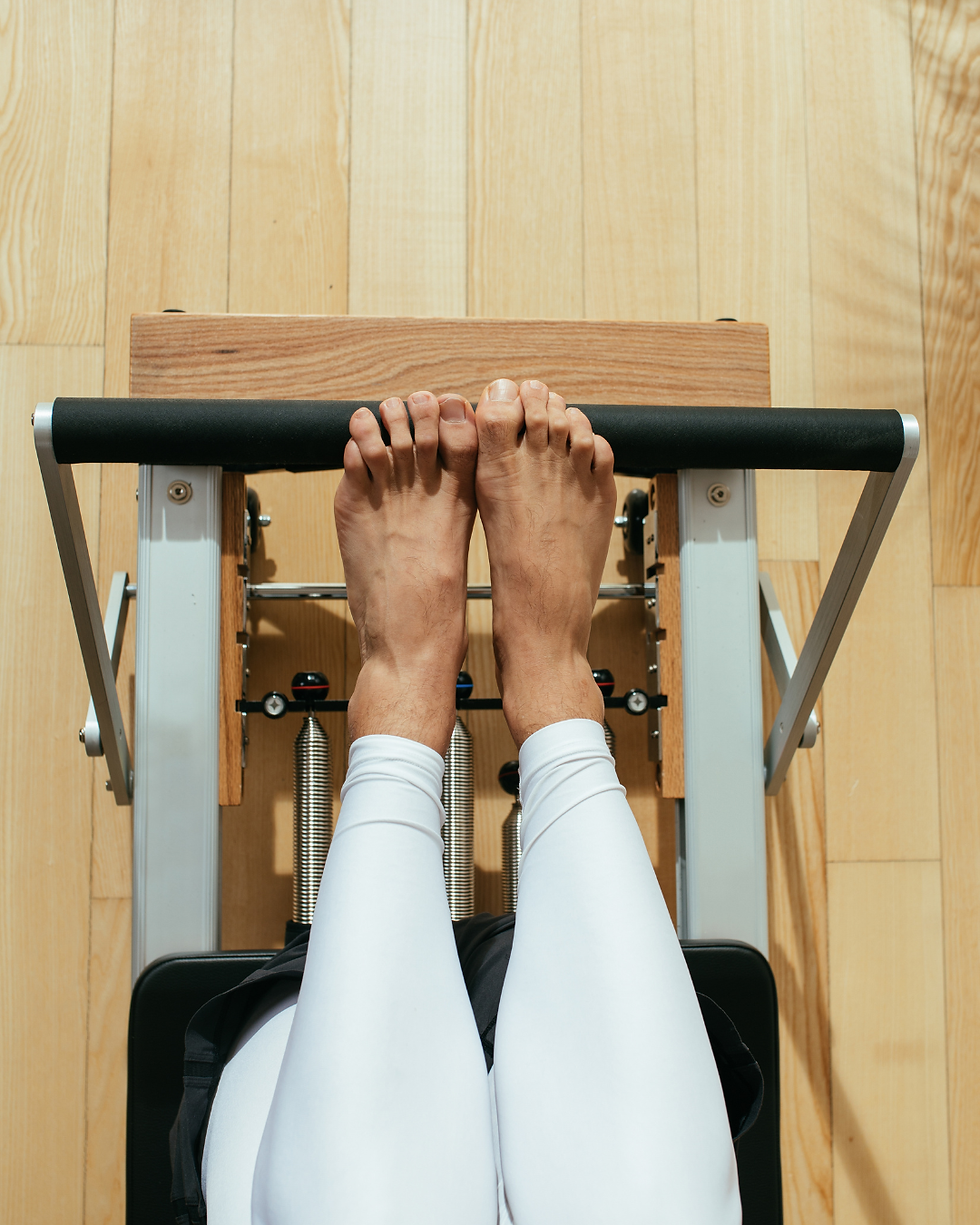
Stronger muscles support your skeleton. Spring resistance on the Reformer and other equipment builds strength in the hips, legs, back and arms. Strong muscles pull on bone, which helps keep it healthy, and they also protect your joints.
Spinal extension builds a stronger back. Back-strengthening exercises, done with control, help counter the forward rounding that weak bones and poor posture can cause and support the spine where fractures are most likely.
Improved posture takes pressure off the spine. STOTT PILATES® emphasizes neutral alignment, which helps distribute load evenly through your vertebrae in daily life.
A strong, stable core. Deep core strength supports your spine during everyday movements like reaching, lifting and getting up from a chair.
Safe, adjustable resistance. Springs can be set to support you or to challenge you, so the work can progress safely as you get stronger.
Confidence in everyday movement. Learning how to bend at the hips, lift safely and move with control helps protect your spine long after class ends.
Not all Pilates is osteoporosis-safe
Movements to avoid or modify:
Forward rounding (spinal flexion): Roll Up, Roll Over, Rolling Like a Ball, Spine Stretch, Hundred with the head lifted, Teaser and crunch-style exercises.
Deep or forceful twisting: Saw, Corkscrew and seated or lying spinal twists.
Rounding and twisting combined: Criss Cross and similar exercises carry the most risk.
Loaded side bending: Deep side bends with weight or resistance.
Jumping or jarring movements if you've had a fracture or have severe osteoporosis, unless your doctor has cleared them.
Safer alternatives we use instead:
Neutral spine core work: Dead bug variations, leg slides and knee folds with the head down.
Spinal extension: Prone back extensions, Swan prep and Breaststroke prep, all done with control.
Hip and leg strength: Bridging, Reformer Footwork, side-lying leg work and standing leg work.
Balance training: Standing and single-leg work on the Reformer and Stability Chair, near support.
Upper body and wrists: Reformer arm work, rowing in a long, neutral spine and supported weight-bearing through the hands.
Gentle rotation within a safe range: Small, controlled turns of the rib cage with the spine long and neutral, only when appropriate for you.
How we work with clients with osteoporosis
At The Pilates Effect, we tailor every session to your bones, your body and your goals.
We start with a conversation. We'll ask about your bone density results, any past fractures, your medical history and what your doctor or physical therapist recommends.
We build around a neutral spine. STOTT PILATES® emphasizes neutral alignment, which makes it a natural fit for bone-safe training. We replace forward-rounding and twisting exercises with safer options that still challenge you.
We prioritize back strength and posture. Extension work and upper-back strengthening help you stand taller and support your spine.
We train balance on purpose. Standing and single-leg work, always near support, builds the steadiness that helps prevent falls.
We progress gradually. As you get stronger, we increase spring resistance and challenge so your muscles and bones keep adapting.
We teach safe everyday movement. Hip hinging, safe lifting and getting up from the floor are skills you'll use every day.
Private and small group sessions are a great way to start, so we can give you the attention and modifications you need. Always check with your doctor before beginning a new exercise program, especially if you've had a fracture.
Other ways to protect your bones
Add weight-bearing activity. Walking, stair climbing and dancing load your bones in ways that help keep them strong.
Keep strength training progressive. Gradually increasing resistance is key to stimulating bone.
Get enough calcium and vitamin D. Dairy, leafy greens, canned fish with bones and fortified foods help. Ask your doctor whether you need a supplement.
Eat enough protein. Bones and muscles both depend on it.
Limit alcohol and don't smoke. Both speed up bone loss.
Make your home fall-safe. Good lighting, secure rugs, grab bars and sturdy shoes all help.
Know your numbers. Ask your doctor about a bone density (DEXA) scan, especially if you're a woman over 65, postmenopausal with risk factors, or have had a fracture.
Strong bones, strong life
An osteoporosis diagnosis doesn't mean you have to stop moving. In fact, the right kind of movement is one of the best things you can do. With smart modifications and a focus on strength, balance and posture, Pilates can help you stay confident, capable and independent for years to come.
If you have osteoporosis or low bone density, let us know before your next session. We'd love to help you build a stronger, safer practice.
This article is for general information and isn't medical advice. Talk with your doctor before starting a new exercise program, especially if you have osteoporosis or a history of fractures.
Cami Grasher is the owner of The Pilates Effect, a Root Cause Holistic Health Coach and Certified Traditional Naturopath at My Root Cause Coach and Your Healthy Concepts in Arlington, TX. She works with clients to identify and address the underlying hormonal, neurological, inflammatory, and metabolic drivers of chronic conditions. This article is for educational purposes only and does not constitute medical advice. Learn more at thepilateseffect.com, myrootcausecoach.com or yourhealthyconcepts.com, or call (214) 558-0996.
If you want to work on this in person, we teach it at The Pilates Effect in Dalworthington Gardens, just west of Arlington.
Here's to Flow and Strength, Cami
Ready to come in? Book a class at The Pilates Effect.


Comments