
Ehlers-Danlos Syndrome: Managing Hyper-mobility Through Reformer Pilates

Updated: May 14
Understanding Ehlers-Danlos
Ehlers-Danlos Syndrome (EDS) represents a group of inherited connective tissue disorders characterized primarily by joint hypermobility, skin hyperextensibility, and tissue fragility.
There are 13 subtypes of EDS, with hypermobile EDS (hEDS) being the most common form. These conditions affect the body's collagen—a crucial protein that provides strength and structure to connective tissues including skin, joints, blood vessels, and organs.
For individuals with EDS, everyday activities can present significant challenges. Joints may dislocate or subluxate easily, leading to chronic pain and instability. Skin may bruise and tear more readily, and healing can be compromised. Many with EDS also experience related conditions such as chronic fatigue, postural orthostatic tachycardia syndrome (POTS), gastrointestinal issues, and proprioceptive difficulties.
Common Symptoms and Challenges
People with EDS often experience:
Joint hypermobility and instability
Frequent dislocations or subluxations
Early-onset osteoarthritis
Chronic pain
Poor proprioception (body awareness in space)
Muscle weakness and fatigue
Delayed wound healing
Skin that bruises easily

Managing these symptoms requires a multidisciplinary approach, and exercise plays a crucial role. However, not all forms of exercise are appropriate for those with EDS. This is where Reformer Pilates offers unique benefits.
The Reformer Pilates Advantage for EDS
Reformer Pilates provides an ideal exercise environment for individuals with Ehlers-Danlos Syndrome for several key reasons:
1. Controlled Movement with Support
The Pilates Reformer offers what many with EDS desperately need—a way to exercise with external support and controlled resistance. Unlike free movement exercises where hypermobile joints can easily move beyond safe ranges, the Reformer provides:
A stable surface that supports the body
Springs that offer adjustable resistance
Straps and handles that guide movement patterns
Physical boundaries that help limit excessive joint motion
This supportive environment allows individuals with EDS to strengthen muscles without risking joint destabilization.
2. Proprioceptive Training
Many people with EDS struggle with proprioception—the awareness of where their body is in space. This can lead to awkward movements and increased injury risk. The Reformer provides immediate tactile feedback through its moving carriage, springs, and straps, helping to improve body awareness. As clients push against resistance or work within the frame's structure, they receive constant proprioceptive input that helps retrain this important sense.
3. Core Stability Development
Core weakness is common in EDS and contributes significantly to joint instability throughout the body. The Reformer's design makes it particularly effective for core training because:
The moving carriage creates instability that engages deep core muscles
Exercises can be performed in positions that support the spine
Resistance can be precisely adjusted to challenge core muscles appropriately
Movement patterns integrate the core with limb function
Developing this "core foundation" helps create a stable center from which safer movement can originate.
4. Balanced Muscle Development
People with EDS often develop muscle imbalances as certain muscles overwork to compensate for joint instability. Reformer Pilates addresses this through:
Exercises that work muscles through their full range while maintaining joint control
Focus on both concentric and eccentric muscle contractions
Attention to opposing muscle groups
Progressive resistance that can be adjusted as strength improves
This balanced approach helps create supportive musculature around vulnerable joints.
Specific Reformer Exercises Beneficial for EDS
For Upper Body Stability
1. Modified Chest Expansion Working with light spring resistance helps strengthen the rotator cuffand scapular stabilizers without placing excessive stress on hypermobile shoulder joints.
2. Arm Circles with Fixed Carriage This exercise improves shoulder proprioception and rotator cuffendurance while the fixed carriage provides stability.
For Core Support
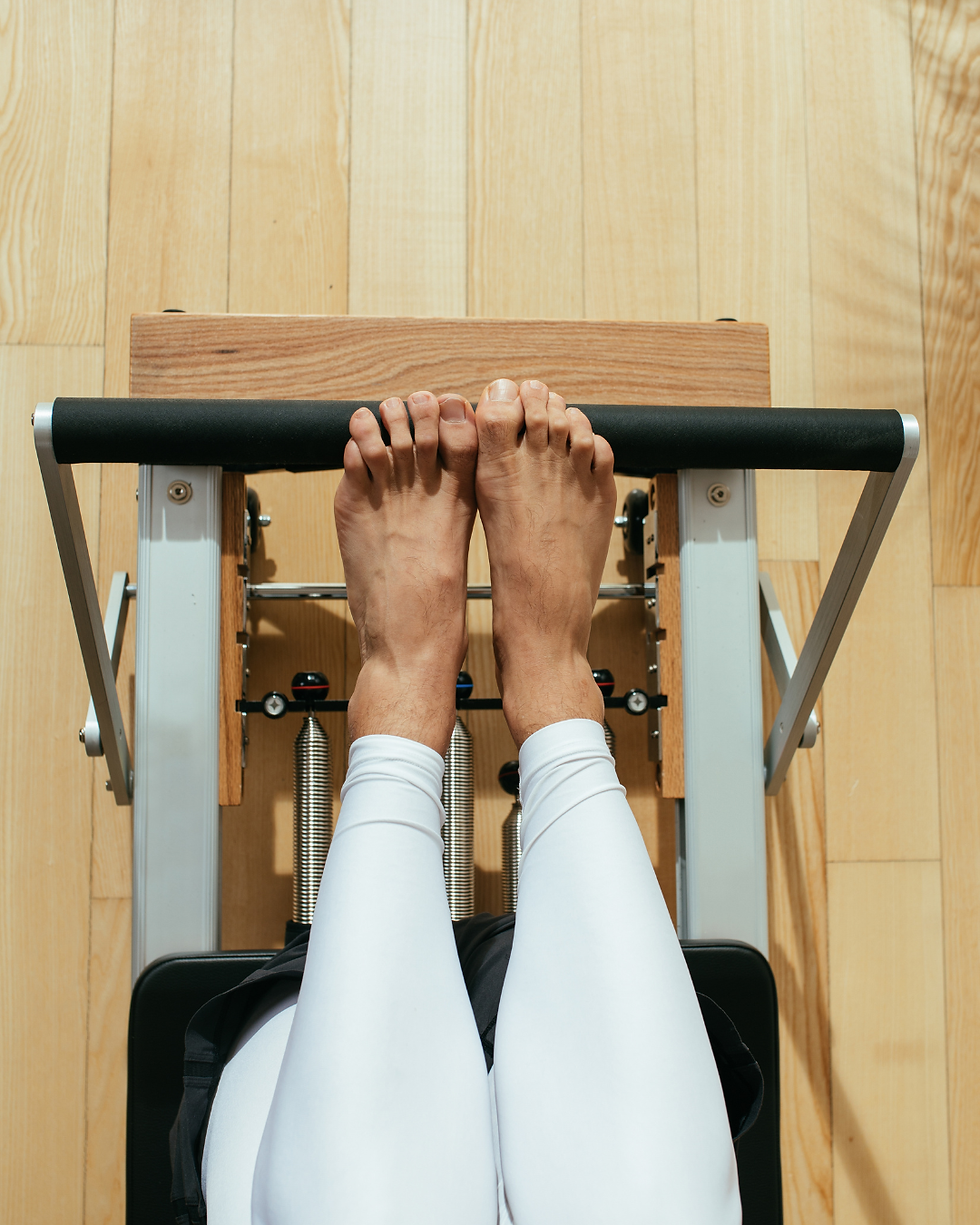
1. Footwork Series with Core Engagement While primarily a lower body exercise, proper execution requires maintaining pelvic and lumbar stability, training core muscles in their stabilizing role.
2. Modified Short Box Series These seated exercises challenge core stability while the box provides support for the pelvis and lower back.
For Lower Body Control
1. Leg Circles with Foot in Strap This exercise promotes hip stability and strengthens hip rotators while the strap provides feedback about leg position.
2. Bridging with Feet on Footbar This builds hamstring and gluteal strength while also training lumbopelvic stability.
Important Considerations for EDS-Focused Reformer Programs
Individualized Assessment
Before beginning Reformer work, individuals with EDS should receive a thorough assessment from an instructor knowledgeable about hypermobility conditions. This should evaluate:
Current joint stability in all major joints
Specific areas of weakness or hypermobility
Pain patterns and triggers
Previous injury history
Current activity tolerance
No two cases of EDS are identical, making personalized programming essential.
Modified Approach to Exercise
Standard Pilates principles may need modification for those with EDS:
Resistance: Usually lower than for typical clients, especially initially
Range of Motion: Often limited to prevent movement into unstable ranges
Repetitions: Generally fewer with more focus on quality
Rest Periods: May need to be longer to prevent fatigue-related form deterioration
Progression: Typically slower with smaller incremental changes
Focus on Proper Form Over Flexibility
For most Pilates clients, increased flexibility might be a goal. For those with EDS, the emphasis shifts:
Focus on joint control throughout movements
Develop awareness of midrange positions rather than end ranges
Learn to engage muscles before initiating movement
Recognize warning signs of joint instability during exercise
Consistent Communication
Instructors should maintain ongoing dialogue with EDS clients about:
Sensations during and after exercise
Delayed pain responses (which are common with EDS)
Energy levels and fatigue patterns
Changes in joint stability or symptoms
This feedback helps ensure the program remains appropriate and beneficial.
Success Stories: EDS Management Through Reformer Pilates
Many individuals with Ehlers-Danlos Syndrome have found significant relief through consistent, appropriate Reformer Pilates training. Common reported benefits include:
Reduced frequency of subluxations and dislocations
Improved functional capacity for daily activities
Decreased reliance on braces and other supportive devices
Better proprioceptive awareness
Reduced pain levels
Improved confidence in movement
While Reformer Pilates cannot cure the underlying collagen defect in EDS, it can dramatically improve quality of life by addressing many of the secondary consequences of hypermobility.
Finding Qualified Instruction
For those with EDS, working with properly qualified instructors is crucial. Look for Pilates professionals who:
Have specific training in hyper-mobility conditions, STOTT Pilates
Understand contraindicated movements for EDS
Take a conservative approach to exercise progression
Are willing to collaborate with Holistic Practitioners who understand Genetics
Listen carefully to client feedback and adapt accordingly
Many instructors with personal experience with hypermobility or specific training in working with special populations can be excellent resources.
Conclusion: Building Stability for Life
For those living with Ehlers-Danlos Syndrome, Reformer Pilates offers more than just an exercise option—it provides a structured approach to developing the body awareness and muscular support needed for greater joint stability and reduced pain. The controlled environment of the Reformer creates a safe space to challenge the body appropriately while building the strength needed for everyday activities.
While EDS presents lifelong challenges, many individuals find that consistent, appropriate Reformer Pilates practice becomes an essential component of their symptom management strategy. By focusing on core stability, balanced muscle development, proprioceptive training, and controlled movement patterns, Reformer Pilates addresses many of the key physical challenges associated with hypermobility disorders.
For those with EDS considering Pilates, starting with qualified instruction on the Reformer rather than mat work often provides the optimal balance of support and challenge to begin building a stronger, more stable foundation for movement.
If you or someone close to you has Ehlers-Danlos Syndrome, managing hyper-mobility through reformer pilates is the way to go.
Learn more about EDS from Root Cause Health Coach, Cami Grasher. Check out her blog and book a Discovery Call.

If you're in the Arlington area, book a class with us and experience for yourself why our clients love The Pilates Effect!


Comments