
Pilates and Arthritis

Pilates and Arthritis — What the Research Actually Says, and Why This Is Personal for Me
If you have arthritis, you have almost certainly been told to exercise. And if you have arthritis, you have almost certainly found that advice both obviously correct and genuinely difficult to follow, because the very joints that exercise is supposed to help are the ones that make exercise painful, intimidating, and sometimes genuinely damaging when approached the wrong way.
This is the gap that Pilates fills so elegantly for so many people with arthritis, and it is why I want to use this month's newsletter to make the case for it clearly, with the research behind it and the practical guidance to actually use it.
As someone who owns The Pilates Effect and has spent years working with clients across a spectrum of physical conditions including arthritis, joint pain, and inflammatory disease, I have watched this practice change people's relationships with their bodies in ways that no other movement modality I have encountered quite replicates. This is not faith. It is observation, and now it is increasingly backed by a growing body of clinical research.

What Arthritis Is Actually Doing to Your Joints
Arthritis is not a single disease. It is an umbrella term covering more than 100 conditions that share the feature of joint inflammation, pain, stiffness, and reduced range of motion.
The two most common forms are osteoarthritis, a degenerative condition in which cartilage breaks down and bone surfaces begin to grind against each other, and rheumatoid arthritis, an autoimmune condition in which the immune system attacks the synovial lining of the joints, causing inflammation, damage, and systemic effects beyond the joints themselves.
Both conditions share a feature that makes exercise simultaneously necessary and complicated: movement hurts, but lack of movement makes everything worse. Joints without movement lose the circulation that delivers nutrients to cartilage. Muscles without use atrophy, removing the support and stability that reduces the load on the joint itself. And people without movement lose the conditioning, balance, and body awareness that prevent the falls and compensatory movement patterns that accelerate joint damage over time.
The challenge is not whether to exercise with arthritis. The research on this is unambiguous: appropriate exercise is one of the most effective disease-modifying interventions available for both osteoarthritis and rheumatoid arthritis, reducing pain, improving function, reducing fatigue, and improving quality of life in ways that medication alone cannot replicate. The challenge is which exercise, at what intensity, with what technique, and modified in what ways to match the specific presentation and limitations of the individual body in question.
This is exactly what Pilates does better than almost anything else available.
What the Research Shows
The evidence base for Pilates in musculoskeletal conditions has grown substantially in recent years. A 2025 systematic review found that Pilates significantly lessens pain and disability and improves quality of life in people with musculoskeletal conditions affecting the extremities, which includes the knees, hips, shoulders, and hands most commonly affected by arthritis. A separate 2025 meta-analysis specifically examining Pilates in knee osteoarthritis, one of the most prevalent and debilitating forms of the disease, found that Pilates significantly improved pain scores, functional capacity, and range of motion compared to control conditions.
A 2024 randomized controlled trial on Reformer Pilates in people with chronic musculoskeletal pain, a category that substantially overlaps with arthritis, found significant improvements not just in pain intensity but in pain coping strategies, kinesiophobia (fear of movement), fatigue, and sleep quality. That last finding matters enormously for arthritis patients, for whom the fear of pain during movement is often as limiting as the pain itself, and for whom sleep disruption from pain creates a cycle of fatigue and reduced pain tolerance that is genuinely hard to break.
Research in rheumatoid arthritis specifically has examined Pilates training effects on exercise capacity and respiratory muscle performance, both of which are compromised in RA due to a combination of deconditioning, inflammation, and the cardiovascular and pulmonary complications associated with systemic inflammatory disease. The results show meaningful improvements in functional capacity and quality of life measures. Clinical Pilates has even been studied in children with juvenile idiopathic arthritis, where a randomized trial found significant improvements in pain, cardiorespiratory fitness, functional ability, and quality of life in the group receiving Pilates combined with conventional physical therapy compared to conventional physical therapy alone.
Why Pilates Works So Well for Arthritis Specifically
The reason Pilates is particularly well-suited for arthritis comes down to several features of the practice that address the specific challenges of exercising with damaged or inflamed joints.
It is low impact by design. The controlled, deliberate movements of Pilates avoid the pounding, jarring, and high-impact loading that makes many conventional exercise formats genuinely harmful for arthritic joints. You are never asked to land hard, jump, or generate force through a compromised joint in a way that exceeds its tolerance.It builds the muscles that support and protect the joint rather than loading the joint itself. Most joint pain in arthritis is amplified by the weakness of the surrounding muscles, which normally absorb and distribute load before it reaches the joint. Pilates builds this supportive musculature, particularly in the core, hips, and posterior chain, in a way that reduces the mechanical stress on the joint during both exercise and daily activity.
It is infinitely modifiable. This is perhaps the most clinically important feature of Pilates for an arthritis population. Every exercise in the Pilates repertoire can be adapted to work within whatever range of motion, load tolerance, and pain threshold an individual has on any given day. There is no version of a squat or a deadlift that works for someone with severe hip osteoarthritis on a flare day. There are many versions of Pilates exercises that do.
It improves proprioception and body awareness, the nervous system's ability to sense joint position in space. Arthritis impairs proprioception, which increases fall risk and compensatory movement patterns that accelerate damage to other joints. Pilates is one of the most effective movement practices for restoring proprioceptive awareness, and the research on fall prevention in older adults with Pilates is compelling.
It addresses the whole body as an integrated system rather than isolating the painful joint.
The compensatory patterns that develop when one joint hurts, the altered gait, the shifted posture, the protective muscle guarding, create their own cascade of strain throughout the kinetic chain. Pilates is designed to identify and correct these patterns, which means working on the hip when the knee is what hurts, working on the thoracic spine when the shoulder is the complaint, and restoring global movement quality rather than just targeting the symptomatic site.
It reduces kinesiophobia. One of the most consistent findings in the Pilates and chronic pain research is that the practice reduces fear of movement in people who have learned to associate movement with pain. This matters because kinesiophobia is one of the primary drivers of the deconditioning that makes arthritis worse over time. A person who is afraid to move stops moving, loses muscle and range of motion, which increases joint load and instability, which increases pain, which increases fear of movement. Pilates, done well with a skilled instructor who understands the condition, interrupts this cycle by providing movement experiences that are safe, controlled, and progressively building confidence alongside strength.
How to Start Safely
For anyone with arthritis considering Pilates, a few practical guidelines apply. Work with a certified Pilates instructor who has experience working with musculoskeletal conditions or who has completed additional training in clinical or therapeutic Pilates. Not all Pilates instruction is equal in its capacity to modify appropriately for joint limitations, and the difference between an instructor who understands your condition and one who does not can be the difference between an experience that helps and one that hurts.
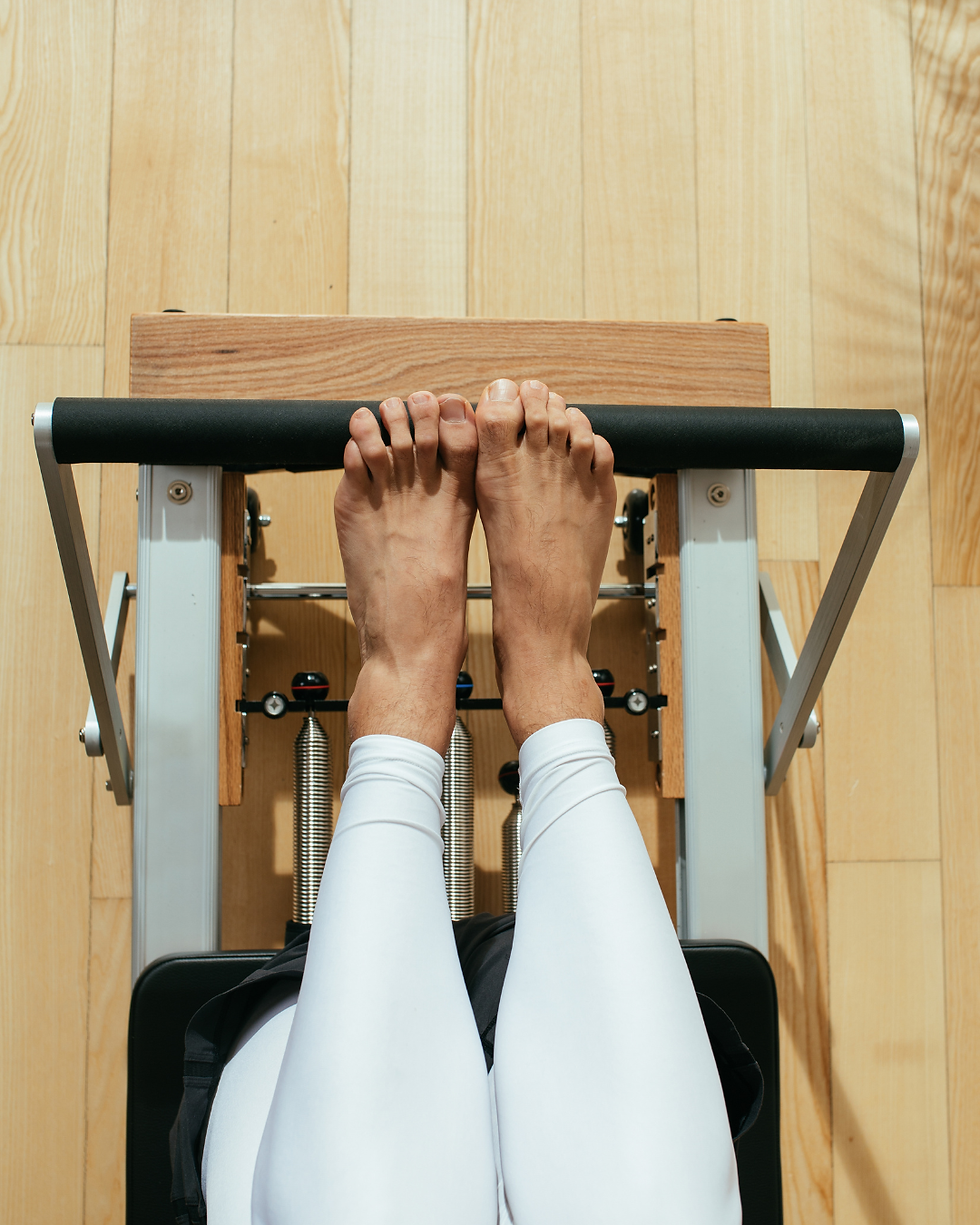
Begin with mat or Reformer work rather than more dynamic or advanced apparatus. The Reformer in particular, the spring-resistance machine that is central to classical Pilates, allows exceptional control over load and range of motion and is often gentler on joints than mat work because the springs can assist rather than resist movement.
Communicate clearly with your instructor about which joints are affected, what your current pain levels are, what movements provoke symptoms, and what your medical team has recommended in terms of exercise intensity and type. A good Pilates instructor treats this information as essential to session design, not as a list of obstacles.
On flare days, modify significantly rather than skipping entirely. Gentle, breath-focused movement even on high-pain days maintains the habit, maintains some degree of joint mobility, and prevents the deconditioning that makes returning after a break harder.
If your arthritis is actively being managed with immunosuppressive or biologic medication, clear exercise initiation with your rheumatologist, not because Pilates is likely to be contraindicated but because your physician's awareness of your movement practice is part of the comprehensive picture of your care.
Arthritis does not mean your movement life is over. For many of my clients, it has meant the beginning of a more intentional, more informed, and ultimately more sustainable relationship with their bodies than they had before the diagnosis.
The pain got their attention. Pilates gave them something to do with it.

Book your Pilates class today!
*The information in this article is educational and does not replace advice from your doctor or a qualified healthcare professional.


Comments