
Pilates V

Pilates V: Connecting the Midline to the Core
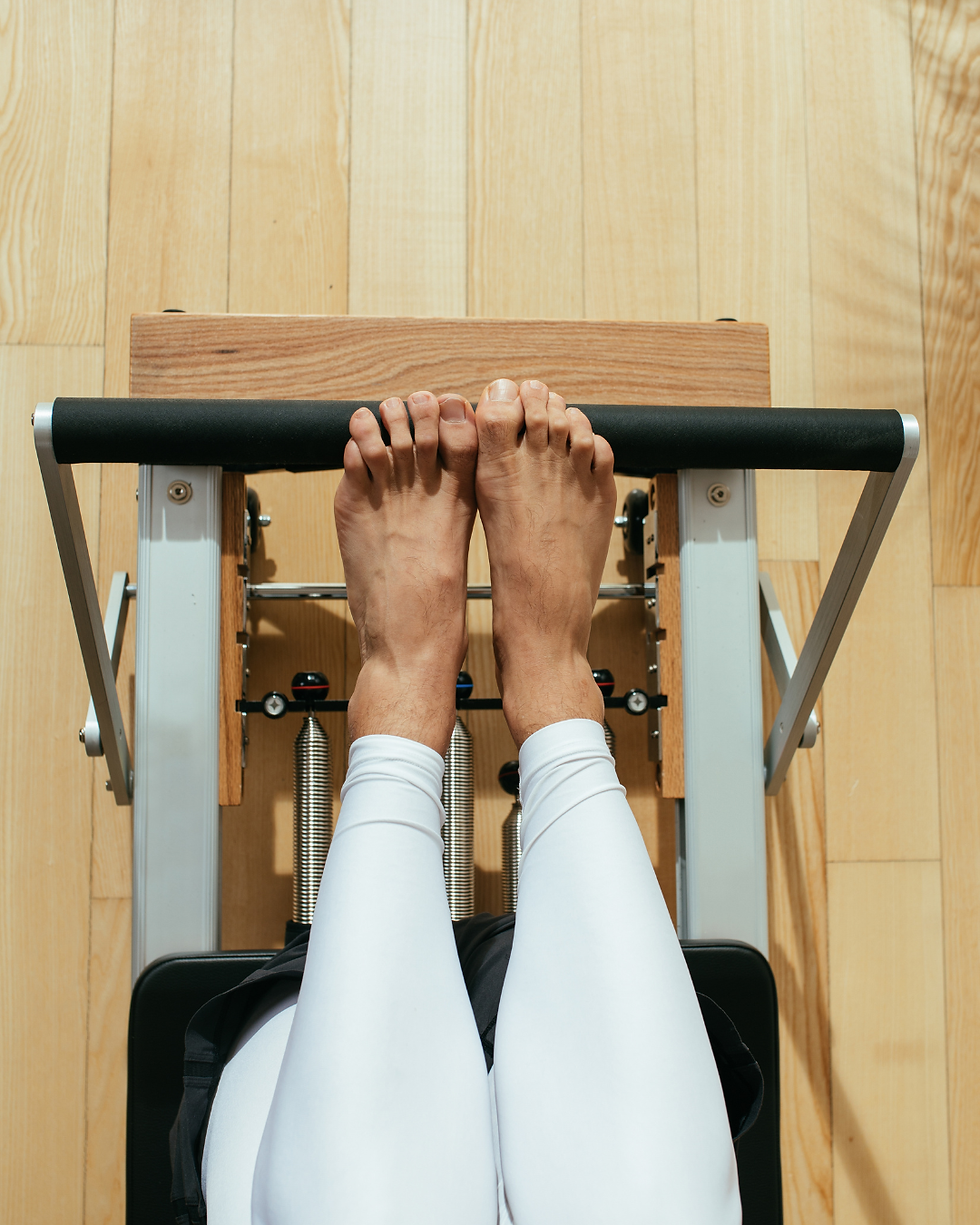
When the heels touch and the toes turn slightly outward, the legs form a gentle V. This position immediately draws the inner thighs toward each other. That inward action travels upward through the adductors and into the deep abdominal wall and pelvic floor. In other words, the feet are not just resting—they are actively recruiting the body’s center line.This midline connection is the foundation of efficient movement. By bringing the legs toward the center, we wake up the deep stabilizers that support the spine and pelvis. The result is a stronger, more organized core that can stabilize the trunk while the limbs move freely.
More Than Just Foot Position
The heels-together, toes-apart stance also:
Encourages proper alignment of the legs and hips
Helps prevent the knees from collapsing inward or flaring outward
Creates a stable base from which the rest of the body can work
Trains the mind to sense the center line of the body
In classical teaching, this position was never arbitrary. It was a way to organize the body from the ground up so that every exercise could be performed with greater precision and control.
When the midline is engaged, the core is more available, the spine is better supported, and movement becomes both safer and more powerful.

How This Principle Ties into STOTT Pilates
STOTT PILATES® is a contemporary approach rooted in modern biomechanics and the Five Basic Principles (breathing, pelvic placement, rib-cage placement, scapular movement and stabilization, and head/cervical placement). While STOTT often favors a parallel foot position to support neutral spine and optimal joint alignment, the deeper purpose behind the classical “heels together, toes apart” stance aligns beautifully with STOTT’s goals.
In STOTT, we still emphasize connecting the limbs to the center. The slight turnout and heel connection used in certain exercises or classical-influenced movements continues to recruit the adductors, which support pelvic stability—one of the key elements of the STOTT principle of pelvic placement. That same midline engagement helps maintain a stable pelvis and neutral lumbar curve while the deep abdominals and pelvic floor work together.
Whether the feet are in parallel or a gentle V, STOTT instructors cue the same essential connection: the legs working in relationship to the core rather than independently of it. The classical stance simply offers one clear, tangible way to feel that relationship. In a STOTT-based session, this awareness supports better postural alignment, more effective core recruitment, and safer, more efficient movement for clients of all levels.
How It Feels in Practice
Try standing or lying with the heels touching and the toes gently turned out. Notice the subtle engagement along the inner thighs and the gentle lift through the lower abdominals. That sensation is the midline talking to the core. Once that connection is established, it can be carried into almost every exercise—footwork on the Reformer, the Hundred, side-lying series, and standing work—whether you are working in a classical or STOTT-informed approach.
Over time, the body learns to find this connection automatically. The feet become a gateway to deeper core awareness rather than just a place to rest.
Bringing It Into Your Practice
Whether you are a client or an instructor, treating “heels together, toes apart” as a mindful setup rather than a default position changes the quality of the work. It turns a simple instruction into a powerful cue for organization, stability, and true core engagement—principles that remain central in both classical and STOTT Pilates.
Next time you take that stance, feel the inner thighs draw toward the midline and notice how the center of the body responds. That is the deeper purpose behind one of Pilates’ most fundamental positions, and one of the reasons the method, in all its thoughtful evolutions, continues to create lasting change in how people move and feel.



Comments