
Pilates for Aging

Pilates for Aging: What the Research Actually Shows About Balance, Strength, and Falls
Pilates has spent the last few years shifting from a boutique-studio trend to something clinicians and researchers are studying specifically for older adults — and the evidence, while still developing, is pointing in a consistent direction: it may be one of the more effective tools for addressing the physical changes that make falls more likely with age.
Why Balance Becomes the Priority
Aging changes the body's balance systems in ways that compound quietly. Research summarized in a systematic review notes that between ages 25 and 75, muscle power declines by about 49% and muscle strength declines by roughly 33%. The consequences show up later in life: between ages 60 and 85, daily step counts and walking speed drop by around 75%, while the rate of falls per number of steps taken rises by roughly 800%. That combination — moving less, more slowly, while becoming more fall-prone with every step — is exactly what fall-prevention research tries to interrupt.

What Pilates Specifically Targets
Pilates was developed in the 1920s by Joseph Pilates under the name "Contrology," built around coordinating strength, mobility, and body control rather than isolated muscle work. That whole-body, control-focused design happens to map closely onto the specific deficits linked to falls in older adults.
According to UCLA Health, Pilates offers several age-specific benefits:
Muscle strength — One study found older adults saw noticeable increases in core strength and balance after just four weeks of Pilates.
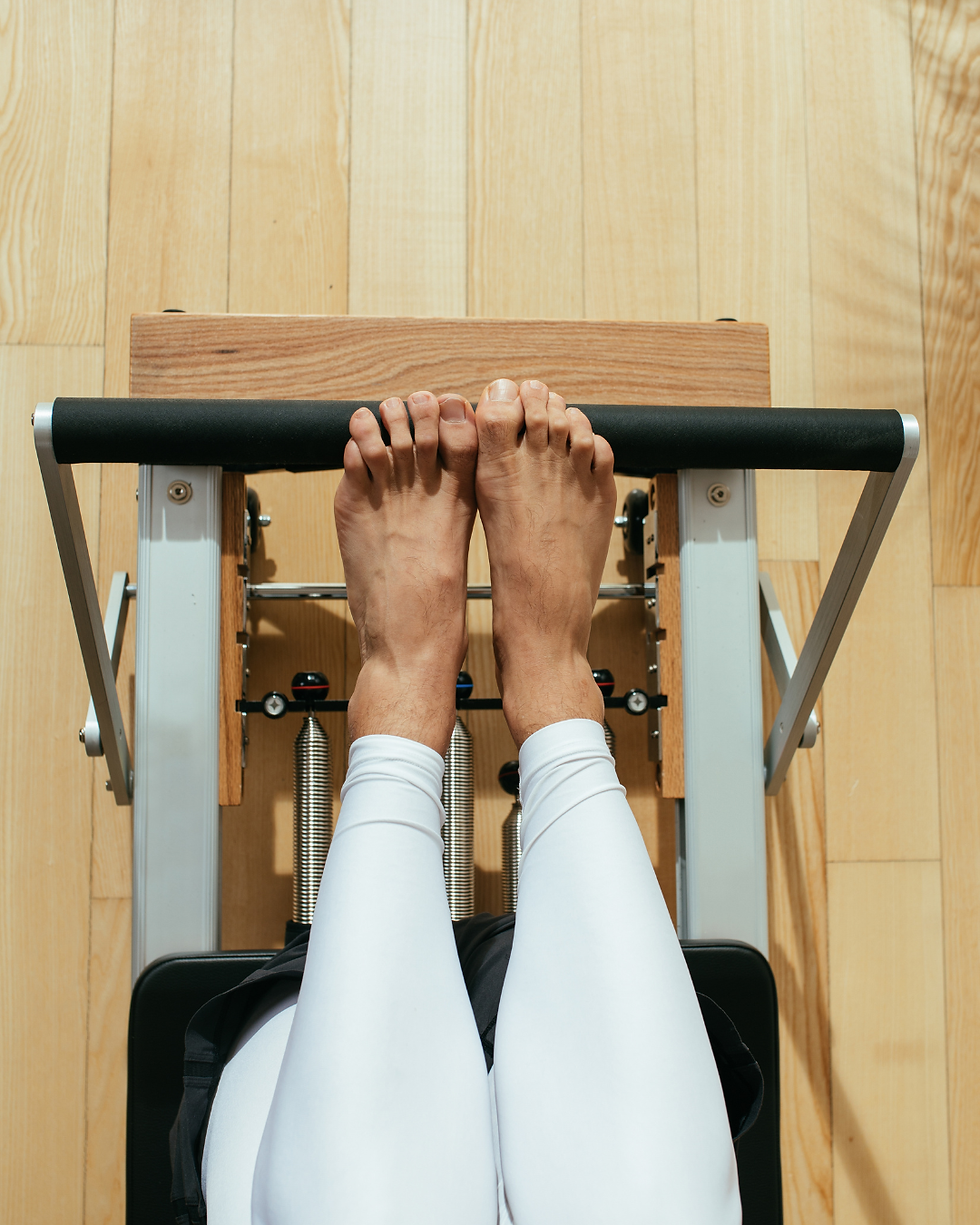
Dynamic balance — Research suggests Pilates may be more effective for improving the kind of balance needed while moving than general exercise is. Adults 65 and older using a Pilates reformer once a week saw improved balance and mobility within 10 weeks.
Gait — Because Pilates builds lower-limb strength, it supports walking speed and steadiness — both used clinically as fall-risk indicators.
Posture — Pilates trains the deep core muscles (including the transversus abdominis and lumbar multifidus) that support the spine, which can offset the hunching often associated with aging.
What the Broader Research Says
A 2023 systematic review and meta-analysis focused specifically on older adults found robust evidence for Pilates improving balance across the studies it evaluated. A separate meta-analysis pooling nine trials of 415 older adults found that mat Pilates improved muscle strength, flexibility, balance, and cardiovascular fitness compared to no exercise — sessions were held at least twice weekly over four to 24 weeks. Notably, that review also found Pilates safe for this age group when taught by a qualified instructor and adapted to individual ability.
Not every finding is uniformly positive, though. A 2024 review focused specifically on strength, endurance, and muscle power (as opposed to balance) concluded that the current evidence isn't yet strong enough to make firm recommendations on those particular outcomes, largely due to the small number of high-quality trials and inconsistent training protocols across studies. That's a useful caveat: Pilates' balance benefits are better supported than its strength-building benefits specifically.
Newer research is also exploring accessibility. A 2025 study on a 20-week live online Pilates program for adults with an average age of 76 found meaningful improvements in six-minute walk distance and single-leg stance time — suggesting older adults don't necessarily need in-person studio access to benefit.
Getting Started Safely
Because Pilates involves controlled, low-impact movements, it's often considered gentler on joints than higher-impact exercise, but form still matters — especially for anyone with osteoporosis, recent surgery, or balance conditions. Reviews consistently note that supervision by a qualified instructor, particularly early on, is what makes the practice both effective and safe for this age group.

Book your pilates class today at The Pilates Effect in Arlington!
The Takeaway
The strongest, most consistent evidence supports Pilates as a balance and fall-prevention tool for older adults, with benefits showing up in as little as four to ten weeks in some studies. The evidence for pure strength gains is more mixed and still developing. For most older adults, Pilates is a reasonable complement to — not a replacement for — general strength training and cardiovascular activity.
*Talk to your doctor before starting a new exercise program, particularly if you have a cardiovascular condition, osteoporosis, or a history of falls.


Comments